
Which to Choose: Woven Carbon Fiber vs Forged Carbon Fiber for Automotive Modification Part
Which to Choose: Woven Carbon Fiber vs Forged Carbon Fiber for Automotive Modification Parts
SEO keywords: carbon fiber auto parts, woven carbon fiber, forged carbon fiber, carbon fiber body kit
Many buyers from modification shops and customers new to carbon fiber products struggle to distinguish woven carbon fiber from forged carbon fiber. These two materials differ greatly in appearance, manufacturing process, mechanical strength and applicable scenarios. A wrong selection wastes budget and may cause cracking or deformation after installation.
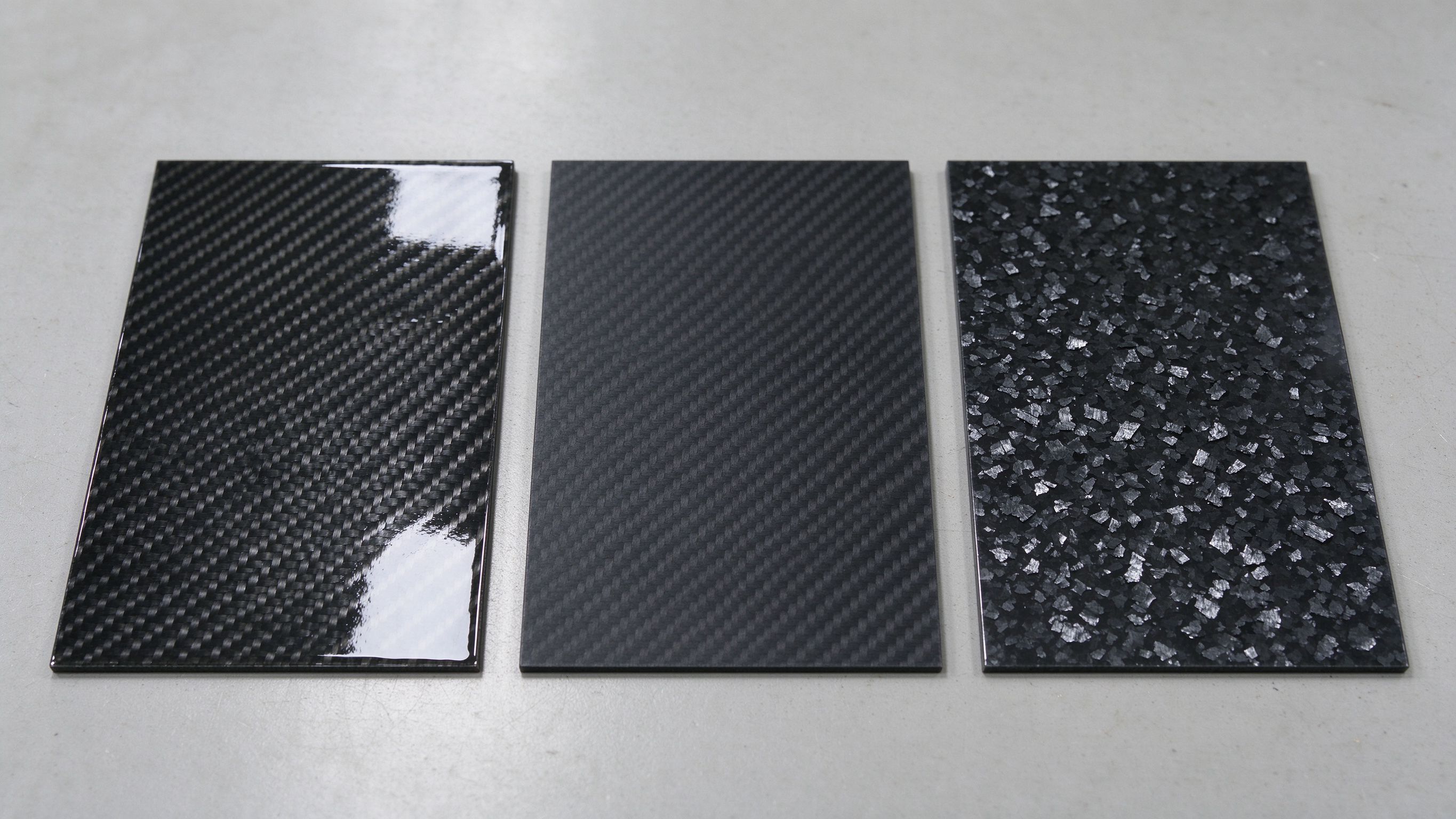
Woven Carbon Fiber (Twill / Plain Weave): The Mainstream High-performance Option
Woven carbon fiber is the most common type. Carbon fiber yarns are woven into fabric, then impregnated with resin and cured. Twill weave creates the classic checkerboard carbon pattern widely recognized in the automotive aftermarket.
Advantages: It features a stable laminate structure with excellent strength and rigidity. It is ideal for aerodynamic components such as front lips, hoods, rear spoilers and diffusers that bear aerodynamic loads. Its neat texture makes it the dominant choice for performance vehicle builds.
Drawbacks: Fixed visual pattern leads to product homogenization; production costs rise when forming complex curved surfaces.
Forged Carbon Fiber: Unique Random Texture, Mainly for Decorative Use
Forged carbon fiber is not woven fabric. Short chopped carbon fiber strands are mixed with resin and molded under high pressure. Every finished part has a unique random grain with no repeating pattern.
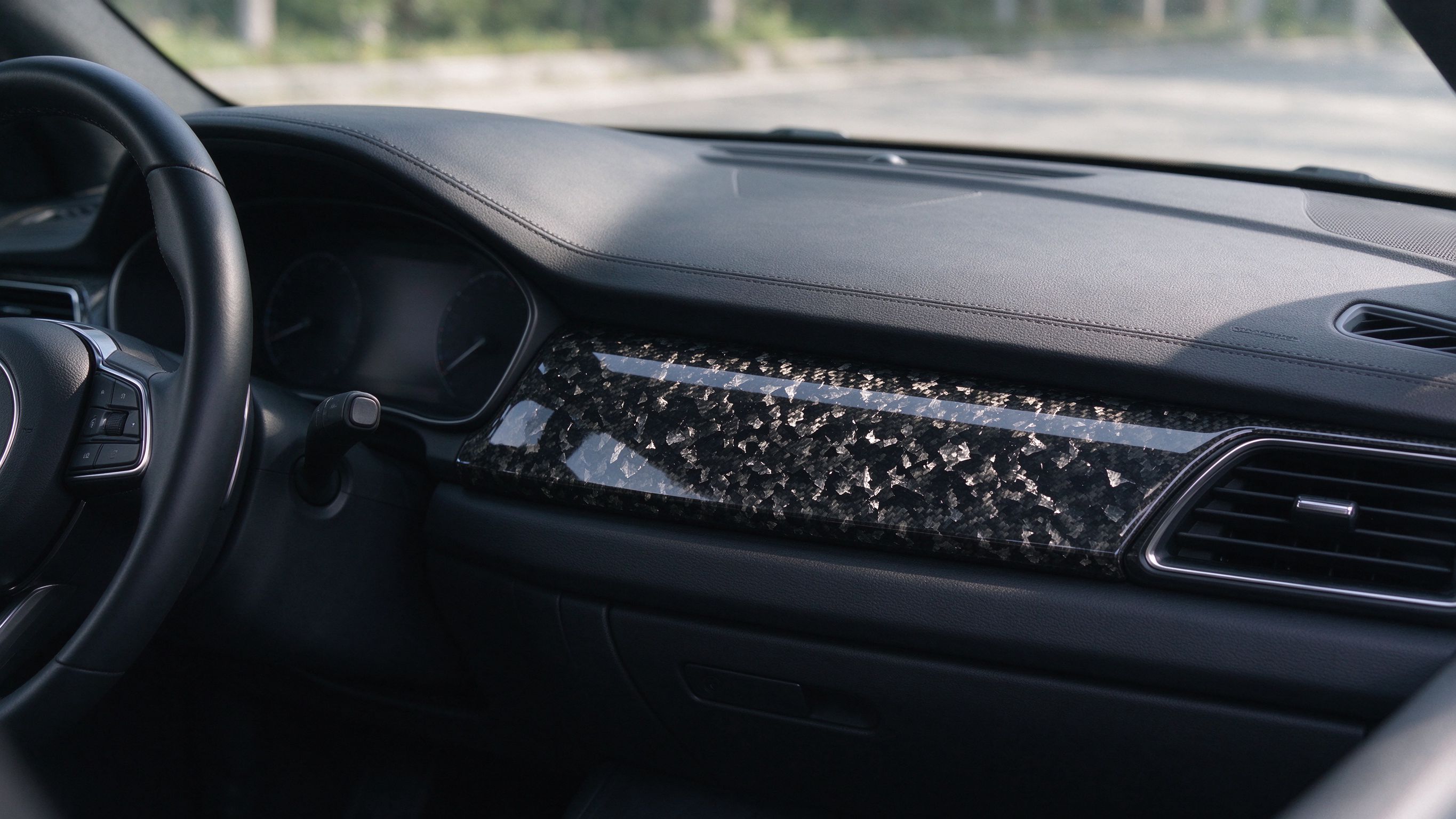
Many clients are attracted by its striking visual effect at first sight, yet it is critical to understand its limitations. Made from discontinuous short fibers, forged carbon delivers lower overall strength than continuous woven carbon fiber. It works best for interior trim, mirror caps and other decorative pieces. It is NOT recommended for large exterior load-bearing aerodynamic parts such as wide body kits or hoods.
Differences in Surface Coating & Finishing
Both woven and forged carbon require resin and clear coat protection, yet polishing and post-processing requirements differ between the two processes. Forged carbon is compression molded with higher resin content, making sanding and polishing more difficult. Low-quality forged carbon often has surface pits or cloudy texture.
Premium woven and forged carbon parts are finished with multi-layer UV-resistant clear coat. This keeps the carbon grain crisp and prevents yellowing under long-term outdoor exposure. When sampling, inspect not only fiber texture but also coating flatness and gloss uniformity.
Quick Selection Guide
Choose woven carbon fiber for high-strength aerodynamic parts. Pick forged carbon if you want exclusive aesthetics for interior decoration. Neither process is inherently superior; suitability depends on the application. Our factory supplies both woven and forged carbon products and supports OEM & ODM customization.
If you plan to attend SEMA Show 2026, welcome to visit us at Booth 12228. You can compare physical samples of both carbon fiber processes on site.
Disclaimer: This article serves only as a technical introduction. Final material selection should consider mounting location and operating environment.

Contact Us
| 86-18820019704 |
| lxautocarbon@gmail.com |
| 86-18820019704 |
| Blog |


BFB Carbon Address
Company :136 Rongjun Plaza, Yongfu Road, Yuexiu District, Guangzhou City, Guangdong Province
Factory :Building 7, Hongrungu Science & Technology Industrial Park, Longtang , Qingyuan ,Guangdong ,CN


邮箱
Email*
*